How Aluminium Paste Enhances Corrosion Resistance in Industrial Coatings
2026 / 01 / 06Corrosion Protection as a Core Requirement in Industrial Coatings
Corrosion remains one of the most significant challenges in industrial infrastructure.
From steel bridges and storage tanks to pipelines and offshore platforms, metal substrates are continuously exposed to moisture, oxygen, chemicals, and temperature fluctuations.
To mitigate degradation and extend service life, industrial aluminium coating systems increasingly rely on aluminium pigments—particularly aluminium paste—to enhance corrosion resistance and coating durability.
Unlike purely decorative metallic pigments, aluminium paste plays a functional role in protective coatings by forming physical barriers, improving film integrity, and supporting long-term performance in harsh environments.
Understanding Corrosion in Industrial Environments
Common Corrosion Mechanisms
Industrial metal structures typically suffer from:
-
Electrochemical corrosion caused by moisture and oxygen
-
Chemical attack from acids, alkalis, or salts
-
Galvanic corrosion when dissimilar metals are present
-
Accelerated degradation under UV and thermal cycling
Without adequate protection, corrosion can compromise structural integrity, increase maintenance costs, and shorten asset lifespan.
Role of Coatings in Corrosion Control
Protective coatings act as the first line of defense by:
-
Isolating the substrate from corrosive agents
-
Providing mechanical resistance
-
Slowing diffusion of water and oxygen
However, not all coatings offer the same level of protection. Pigment selection is a decisive factor in determining long-term corrosion resistance.
Aluminium Paste as a Functional Anti-Corrosion Pigment
What Is Aluminium Paste?
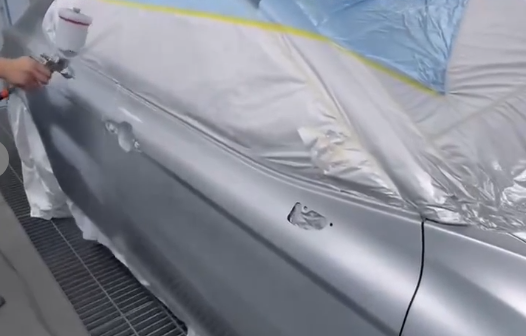
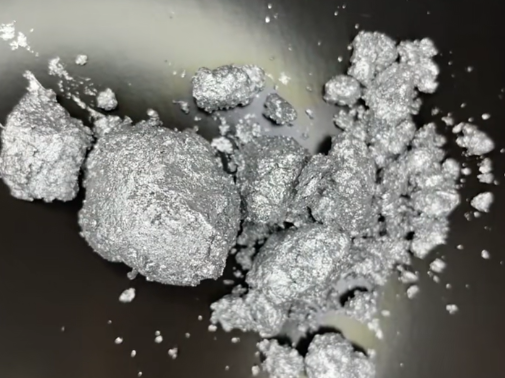
Aluminium paste consists of thin aluminium flakes dispersed in a carrier medium.
In industrial coatings, these flakes are engineered to achieve:
-
High aspect ratio
-
Controlled particle size distribution
-
Stable dispersion within the binder system
These characteristics differentiate aluminium paste from spherical or granular metallic powders.
Why Aluminium Paste Is Used in Industrial Coatings
Aluminium paste offers several advantages:
-
Excellent barrier-forming capability
-
Strong compatibility with protective coating binders
-
Proven performance in demanding environments
As a result, aluminium paste has become a standard pigment in aluminium anti corrosion coating formulations.
The “Fish-Scale” Barrier Effect Explained
Flake Orientation and Layered Structure
When aluminium paste is incorporated into a coating, the flakes tend to orient parallel to the substrate during film formation.
This creates a layered structure often described as a “fish-scale” or “lamellar” barrier.
Key outcomes include:
-
Extended diffusion pathways for water and oxygen
-
Reduced permeability of the coating film
-
Improved resistance to underfilm corrosion
How the Barrier Effect Slows Corrosion
Instead of allowing corrosive agents to pass directly through the coating, aluminium flakes force them to follow a tortuous path.
This mechanism:
-
Delays corrosion initiation
-
Slows corrosion propagation
-
Enhances long-term coating performance
Numerous industry studies have shown that lamellar pigments significantly reduce water vapor transmission compared to coatings without flake pigments.
Aluminium Paste vs Other Anti-Corrosion Pigments
Comparison with Zinc-Rich Coatings
Zinc-rich coatings provide cathodic protection but have limitations:
| Property | Zinc Pigments | Aluminium Paste |
|---|---|---|
| Protection Type | Sacrificial | Barrier-based |
| Film Density | Medium | High |
| Long-Term Stability | Moderate | High |
| Visual Appearance | Dull | Metallic |
Aluminium paste does not replace zinc in all applications but complements it in multi-layer systems.
Comparison with Iron Oxides and Inhibitors
Traditional anti-corrosion pigments such as iron oxides or inhibitors primarily slow corrosion chemically.
Aluminium paste, by contrast:
-
Physically blocks corrosive pathways
-
Maintains effectiveness over long periods
-
Enhances both protection and durability
This makes aluminium pigments particularly suitable for high-performance protective coatings.
Compatibility with Industrial Coating Systems
Binder Systems Commonly Used
Aluminium paste performs well in various industrial coating binders, including:
-
Epoxy coatings
-
Polyurethane systems
-
Silicone-based heat-resistant coatings
-
Alkyd and modified alkyd coatings
Proper formulation ensures stable dispersion and optimal flake orientation.
Multi-Layer Protective Systems
In many industrial applications, aluminium paste is used in:
-
Intermediate barrier layers
-
Topcoats for weather resistance
-
Combined systems with zinc-rich primers
This layered approach maximizes corrosion resistance while maintaining mechanical strength.
Durability and Long-Term Performance
Resistance to Environmental Stress
Industrial coatings containing aluminium paste demonstrate improved resistance to:
-
UV degradation
-
Moisture penetration
-
Thermal expansion and contraction
-
Mechanical wear
The metallic flakes help maintain film integrity under repeated stress cycles.
Visual and Functional Stability
In addition to protection, aluminium paste supports:
-
Stable metallic appearance
-
Reduced chalking
-
Lower gloss loss over time
This combination of functional and visual durability is particularly valuable for exposed industrial assets.
Typical Industrial Applications
Infrastructure and Heavy Industry
Common applications include:
-
Bridges and steel frameworks
-
Oil and gas pipelines
-
Power plants and substations
-
Chemical processing facilities
These environments demand coatings with long service intervals.
Marine and Coastal Environments
In marine conditions, coatings face:
-
High salinity
-
Constant humidity
-
Accelerated corrosion rates
Aluminium paste-based coatings are frequently selected for their enhanced barrier performance in such environments.
Environmental and Regulatory Considerations
Supporting Long-Life Coatings
By extending maintenance cycles, aluminium paste contributes to:
-
Reduced material consumption
-
Lower lifecycle costs
-
Improved sustainability
Longer-lasting coatings reduce the environmental impact associated with frequent recoating.
Compatibility with Modern Standards
Aluminium pigments are increasingly adapted for:
-
Low-VOC coating systems
-
Waterborne protective coatings
-
Environmentally compliant formulations
This adaptability supports evolving regulatory requirements worldwide.
Future Outlook for Aluminium Anti-Corrosion Coatings
Ongoing Technical Development
Research continues to focus on:
-
Optimizing flake geometry
-
Enhancing dispersion stability
-
Improving compatibility with water-based systems
These advances are expected to further strengthen aluminium paste’s role in corrosion-resistant coatings.
Growing Demand in Industrial Markets
Infrastructure investment and asset protection priorities are driving demand for high-performance coatings.
As a result, aluminium paste remains a cornerstone material in the future of corrosion resistant coatings for aluminium and steel substrates.
Conclusion: A Proven Barrier for Industrial Protection
Aluminium paste enhances corrosion resistance in industrial coatings through its unique barrier-forming mechanism, durability, and compatibility with advanced coating systems.
By slowing moisture and oxygen penetration, supporting long-term film integrity, and reducing maintenance requirements, aluminium paste continues to play a critical role in modern industrial protection strategies.