How to Choose the Right Bronze Powder for Printing Inks?
2026 / 09 / 12For manufacturers of metallic printing inks, choosing the right bronze powder for printing inks is important for achieving the required golden metallic appearance, brightness and printing performance.
Bronze powder, also known as bronze pigment or metallic gold pigment, is widely used to create gold, bronze and other metallic effects in printing inks and decorative coatings.
However, not every bronze powder grade is suitable for every printing application. Particle size, colour shade, brightness, dispersion and the printing process all need to be considered before purchasing.
So, how should printing ink manufacturers choose the right bronze powder?
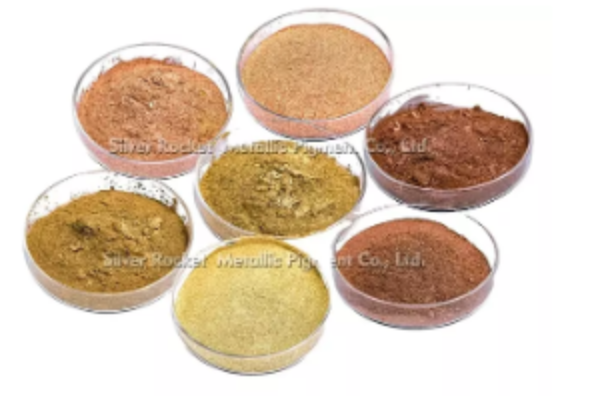
1. What Is Bronze Powder Used for in Printing Inks?
Bronze powder is a metallic pigment commonly used to create golden and bronze visual effects.
Depending on the grade and formulation, it can be used in:
- Packaging printing
- Decorative printing
- Paper printing
- Plastic printing
- Gravure printing
- Flexographic printing
- Screen printing
- Offset printing
- Decorative coatings
- Specialty metallic inks
The main purpose of using bronze powder in printing ink is to create a metallic appearance that conventional organic pigments cannot easily reproduce.
The final effect can range from a bright golden appearance to a deeper bronze or antique metallic finish.
2. Why Is the Right Bronze Powder Important?
The visual performance of a metallic ink depends heavily on the characteristics of the bronze pigment.
Using an unsuitable grade can lead to:
- Low metallic brightness
- Uneven colour
- Poor dispersion
- Excessive particle visibility
- Inconsistent printing
- Poor surface appearance
- Colour differences between batches
For printing ink manufacturers, the objective is therefore not simply to find a bronze powder with a suitable colour.
The pigment should also match the ink formulation and printing process.
3. How Does Particle Size Affect Bronze Powder?
Particle size is one of the key factors when selecting bronze pigment powder.
Different particle sizes can produce different metallic effects.
Fine Bronze Powder
Fine particles can provide a smoother and more uniform metallic appearance.
They can be considered for applications requiring:
- Fine metallic effects
- Smooth printing surfaces
- Detailed graphics
- More uniform colour
Fine grades can be particularly useful where the printed design contains small text, detailed patterns or fine lines.
Medium Particle Size
Medium grades can provide a balance between:
- Metallic brightness
- Coverage
- Dispersion
- Surface appearance
They can be suitable for general metallic printing applications.
Coarser Bronze Powder
Coarser particles can create a stronger metallic texture and more pronounced visual effect.
They may be considered when the target is:
- Strong metallic appearance
- Higher visual sparkle
- Decorative effects
- Special metallic finishes
However, the appropriate particle size should always be evaluated according to the printing process and required graphic detail.
4. How to Choose the Colour of Bronze Powder?
Bronze powder is available in different shades, and the final colour can vary depending on the pigment composition and formulation.
Printing ink manufacturers may require:
- Bright gold
- Rich gold
- Pale gold
- Bronze
- Deep bronze
- Antique gold
- Yellow-gold effects
The zinc and copper composition of bronze pigments can influence the resulting shade.
Therefore, manufacturers should define the target colour before selecting a grade.
When colour matching is critical, it is recommended to test a sample under the actual ink formulation and printing conditions.
5. Bronze Powder for Gravure and Flexographic Printing
Gravure and flexographic printing are widely used for packaging and decorative printing applications.
When selecting bronze powder for these processes, manufacturers should consider:
- Particle size
- Dispersion
- Ink viscosity
- Printing speed
- Mesh or cell structure
- Substrate
- Required metallic brightness
- Drying conditions
A grade that performs well in one printing process may not necessarily provide the same result in another.
For high-speed industrial printing, consistent dispersion and stable colour are particularly important.
6. Bronze Powder for Screen Printing
Screen printing often requires a stronger metallic effect and good pigment transfer.
For these applications, bronze powder selection should consider:
- Particle size
- Metallic brightness
- Ink viscosity
- Screen mesh
- Pigment loading
- Surface smoothness
The relationship between particle size and screen mesh is particularly important.
If the pigment is too coarse for the selected mesh, printing performance can be affected.
Therefore, a sample test is recommended before bulk purchasing.
7. How Does Dispersion Affect Bronze Pigment Performance?
Good dispersion is essential for producing a consistent metallic ink.
Poor dispersion may cause:
- Pigment agglomeration
- Uneven colour
- Reduced metallic appearance
- Printing defects
- Poor surface quality
- Batch-to-batch variation
Bronze powder should therefore be incorporated into the ink using a suitable dispersion process.
The exact procedure depends on the resin, solvent system, additives and printing process.
Manufacturers should avoid using excessive processing conditions without first confirming compatibility with the pigment.
8. What Resin System Should Be Used With Bronze Powder?
Bronze powder does not work independently from the ink formulation.
The resin system can influence:
- Pigment wetting
- Dispersion
- Adhesion
- Gloss
- Metallic appearance
- Storage stability
- Printing performance
Before selecting a bronze pigment, manufacturers should identify the intended ink system.
For example, the requirements can differ between:
- Solvent-based inks
- Water-based inks
- UV inks
- Screen printing inks
- Gravure inks
- Flexographic inks
The selected bronze powder should be evaluated in the actual formulation rather than relying only on its appearance in a laboratory sample.
9. How to Choose Bronze Powder for Printing Inks?
A practical selection process can help printing ink manufacturers find the right grade.
1. Define the Printing Application
Determine whether the pigment will be used for:
- Gravure printing
- Flexographic printing
- Screen printing
- Offset printing
- Packaging printing
- Decorative printing
2. Define the Target Colour
Identify the required shade, such as bright gold, yellow gold, bronze or deep bronze.
3. Select the Particle Size
Choose the particle size according to the desired metallic effect, printing detail and printing process.
4. Check Dispersion
Test the pigment in the actual ink system to evaluate wetting and dispersion.
5. Conduct a Printing Test
The most reliable way to evaluate bronze powder is to print it under conditions close to actual production.
Check:
- Metallic brightness
- Colour
- Uniformity
- Surface appearance
- Printing stability
- Drying performance
- Adhesion
6. Compare Multiple Grades
When the target effect is not yet clearly defined, testing several grades can help identify the best balance between appearance, performance and cost.
10. What Should You Ask a Bronze Powder Supplier?
Before purchasing bronze powder in bulk, printing ink manufacturers should request sufficient technical information.
Important information may include:
| Evaluation Factor | Why It Matters |
|---|---|
| Particle Size | Influences metallic effect and printing detail |
| Colour Shade | Determines the final gold or bronze appearance |
| Brightness | Affects metallic visual performance |
| Composition | Influences colour and appearance |
| Dispersion | Affects ink uniformity |
| Resin Compatibility | Important for formulation stability |
| Batch Consistency | Important for repeat production |
| TDS / SDS / COA | Supports technical evaluation |
| Sample Availability | Allows testing before bulk purchase |
A professional bronze powder supplier should be able to recommend an appropriate grade according to the customer's printing application.
11. Bronze Powder for Different Printing Applications
Different applications can require different metallic effects.
Packaging
Packaging often requires attractive metallic appearance, consistent colour and good printing performance.
Suitable bronze powder should provide the required metallic effect while maintaining stable production.
Decorative Printing
Decorative applications may require stronger metallic brightness or specific gold and bronze shades.
Particle size and colour selection become particularly important.
Labels and Specialty Printing
Labels and specialty products may require fine metallic effects and good graphic definition.
A finer bronze pigment grade can be considered when detailed patterns and text are important.
The final selection should always be confirmed through sample testing.
12. Why Choose an Experienced Bronze Powder Manufacturer?
For industrial printing ink production, supplier consistency is important.
Even when two products have similar colour descriptions, differences in particle size, morphology and composition can result in different printing performance.
An experienced manufacturer can provide:
- Multiple bronze powder grades
- Different colour shades
- Different particle sizes
- Stable batch consistency
- Technical documentation
- Sample testing
- Application recommendations
- Technical support
For customers purchasing bronze powder in bulk, long-term supply stability is also an important consideration.