Aluminum Paste for Printing Ink: High Gloss, Strong Coverage, Stable Dispersion
2026 / 05 / 14In the competitive printing industry, visual impact determines product value. From flexible packaging and tobacco cartons to decorative labels and gift boxes, metallic brilliance enhances shelf appeal and brand recognition. Aluminum paste for printing ink plays a critical role in delivering mirror-like brightness, opacity, and smooth printability across gravure, flexographic, and offset systems.
This article explains how to choose the right aluminum paste for ink applications, key performance indicators, and how manufacturers can optimize production efficiency while maintaining stable quality.
Why Aluminum Paste Is Essential in Printing Ink
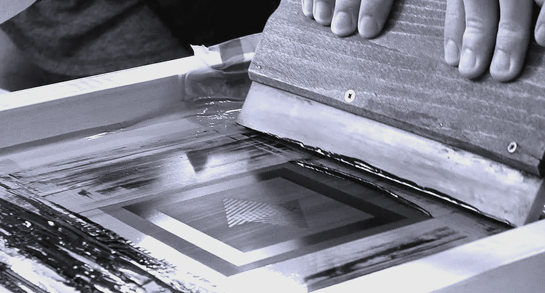
Aluminum paste consists of micron-scale aluminum flakes dispersed in solvent or resin systems. In ink formulations, these flakes create a reflective metallic layer that provides:
- High gloss and metallic luster
- Strong hiding power and opacity
- Excellent surface smoothness
- Enhanced decorative value
Compared with silver pigments or pearlescent pigments, aluminum paste offers stronger reflectivity and sharper metallic effects, making it ideal for premium packaging.
Types of Aluminum Paste for Ink Applications
1. Leafing Aluminum Paste for Ink
Leafing grades float to the ink film surface during drying, forming a dense reflective layer.
Advantages:
- Maximum metallic brilliance
- Mirror-like surface finish
- Strong barrier effect
Best for:
- Decorative packaging
- Cigarette box printing
- Luxury labels
2. Non-Leafing Aluminum Paste for Ink
Non-leafing grades distribute evenly throughout the ink film.
Advantages:
- Better overprint varnish adhesion
- Stronger chemical resistance
- Improved abrasion resistance
Best for:
- Flexible packaging
- Industrial labels
- Laminated film structures
Key Technical Parameters Buyers Should Evaluate
| Parameter | Why It Matters | Typical Requirement for Ink |
|---|---|---|
| Particle Size (D50) | Affects gloss and smoothness | 5–20 μm |
| Solid Content | Determines metallic strength | 60–75% |
| Solvent Compatibility | Prevents gelling | Ester / Ketone compatible |
| Resin Coating | Improves stability | Recommended |
| Screen Residue | Ensures smooth printing | Low residue |
For high-speed gravure printing, fine particle size and narrow distribution are essential to prevent blocking and plate wear.
Common Problems in Ink Formulation (And Solutions)
1. Poor Metallic Gloss
Cause: Incorrect particle size or insufficient orientation
Solution: Use fine leafing grade with high aspect ratio flakes
2. Ink Thickening or Gelling
Cause: Incompatible solvent system
Solution: Select aluminum paste matched to ester/ketone system
3. Poor Overprint Adhesion
Cause: Leafing pigment floating excessively
Solution: Choose controlled leafing or non-leafing grade
4. Sedimentation During Storage
Cause: Low viscosity system
Solution: Use resin-coated aluminum paste with anti-settling performance
Market Trends: Water-Based and Low-VOC Systems
Environmental regulations are pushing ink manufacturers toward water-based systems. Modern resin-coated aluminum paste technologies improve corrosion resistance and dispersion stability in water-based inks, helping printers reduce VOC emissions without sacrificing metallic brilliance.
Choosing the right grade early in formulation development reduces reformulation costs and shortens production cycles.
How to Select the Right Supplier
Professional aluminum paste manufacturers should provide:
- Detailed TDS and particle size distribution data
- Compatibility testing support
- Batch-to-batch consistency
- Technical consultation for ink formulation
- Fast sampling and bulk supply capability
Stable supply and technical support are especially critical for large-volume packaging printers.
Conclusion
Aluminum paste for printing ink is not just a decorative pigment — it is a performance material that directly affects gloss, print stability, adhesion, and long-term durability.
Whether you require high-brightness leafing grades for premium packaging or stable non-leafing grades for industrial ink systems, selecting the right aluminum paste can significantly improve print quality and production efficiency.
For bulk purchasing, custom particle size requirements, or resin-coated grades designed for gravure and flexo systems, technical consultation and sample evaluation are recommended before large-scale production.