How to Choose the Right Resin and Solvent System for Aluminum Paste in Coatings
2026 / 08 / 15Aluminum paste is widely used as a metallic pigment in automotive paints, plastic coatings, industrial coatings, anti-corrosion coatings, and decorative finishes. It can provide excellent metallic brightness and visual appeal when used correctly.
However, choosing the right aluminum paste is only part of the process.
The resin system, solvent system, additives, and dispersion process can have a significant impact on the final metallic appearance. Even a high-quality aluminum paste may fail to achieve the expected effect if it is used with an incompatible coating formulation.
For coating manufacturers, understanding the relationship between aluminum paste and the coating system is therefore essential.
Below are two practical examples that demonstrate why formulation compatibility matters.
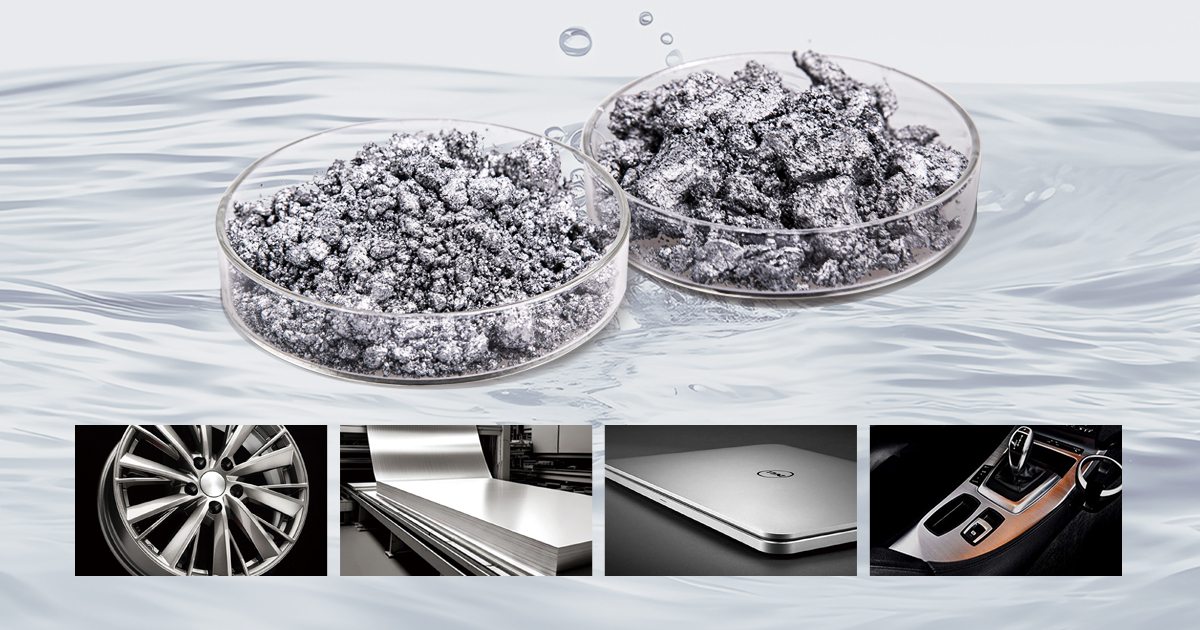
1. High-Brightness Aluminum Paste for Plastic Coatings
Plastic coatings often require a smooth, bright, and highly reflective metallic finish. When the target is a high-brightness silver effect, simply adding a high-brightness aluminum paste to any resin system does not guarantee the desired result.
Choosing the Right Resin
For high-gloss metallic plastic coatings, manufacturers generally need a resin system capable of providing:
- High gloss
- Good leveling
- Smooth film formation
- Good aluminum flake orientation
- Excellent surface appearance
For example, high-gloss PU resins or specialized electroplating-effect resins can be considered when developing high-brightness metallic plastic coatings.
In contrast, using an ordinary polyurethane or acrylic resin without considering its compatibility with the aluminum pigment may make it difficult to achieve the expected metallic appearance.
The problem is not necessarily the aluminum paste itself.
The resin system may simply not provide the right environment for the aluminum flakes to achieve their optimal orientation.
2. Additives and Solvent Balance Also Matter
Resin selection is only one part of the formulation.
Other formulation components can also influence the final appearance of aluminum paste.
Important Factors Include:
- Leveling agents
- Aluminum flake orientation additives
- Dispersing additives
- Solvent selection
- Solvent evaporation rate
- Pigment concentration
For high-brightness metallic coatings, an appropriate solvent evaporation gradient can help the coating film form correctly and allow the aluminum flakes to achieve a more favorable orientation.
If the solvent evaporates too quickly or too slowly, the aluminum flakes may not arrange as expected, resulting in:
- Reduced brightness
- Uneven metallic appearance
- Poor leveling
- Increased surface defects
Therefore, achieving a premium metallic finish requires the aluminum paste, resin, additives, and solvent system to work together.
3. Case Study: Creating a Bright White Metallic Finish with Leafing Aluminum Paste
A different situation occurs when developing a steel coating that requires a bright white metallic appearance.
In this type of application, a leafing aluminum paste may be selected because its performance depends heavily on the ability of aluminum flakes to migrate toward and remain near the coating surface.
The basic principle is simple:
The aluminum flakes need to float and form a relatively dense layer near the coating surface to create the desired metallic effect.
If the coating system prevents the aluminum flakes from properly floating, the expected metallic appearance may not be achieved.
4. Why Resin Selection Matters for Leafing Aluminum Paste
For a leafing aluminum paste system, the resin should provide an environment that allows the aluminum flakes to achieve the required surface orientation.
An unsuitable resin may cause the flakes to remain dispersed throughout the coating instead of moving toward the surface.
This can lead to:
- Reduced metallic brightness
- Poor leafing effect
- Less reflective surface
- Uneven metallic appearance
Therefore, when developing a leafing aluminum paste coating, resin selection should be considered together with the pigment rather than treated as a separate decision.
5. Why Solvent Selection Is Critical for Leafing Aluminum Paste
Solvent selection is another important factor.
The interaction between the solvent system and the surface characteristics of aluminum flakes can affect their orientation and leafing behavior.
For this reason, coating manufacturers should carefully evaluate solvent polarity and compatibility when formulating with leafing aluminum paste.
Highly polar solvents can interfere with the desired leafing behavior in some formulations, so the solvent system should be selected according to the specific aluminum paste and resin system recommended by the manufacturer.
Rather than applying a universal "solvent blacklist" to every formulation, manufacturers should verify compatibility through laboratory testing and the supplier's technical recommendations.
6. The Same Aluminum Paste Can Produce Different Results in Different Formulations
This is one of the most important points for coating manufacturers.
Suppose two companies purchase exactly the same aluminum paste.
Company A obtains:
Bright + smooth + strong metallic appearance
Company B obtains:
Dull + uneven + weak metallic appearance
Does this necessarily mean the aluminum paste has a quality problem?
Not necessarily.
The final result can be affected by:
- Resin type
- Solvent system
- Additives
- Pigment concentration
- Dispersion method
- Mixing speed
- Application method
- Film thickness
- Drying conditions
This is why aluminum paste should always be evaluated inside the actual coating formulation.
7. A Simple Guide to Matching Aluminum Paste with the Coating System
Before selecting an aluminum paste, coating manufacturers can follow these steps.
Step 1: Define the Desired Metallic Effect
Determine whether you need:
- High brightness
- Strong metallic reflection
- Fine silver appearance
- Strong sparkle
- White metallic appearance
- Chrome-like appearance
Step 2: Select the Appropriate Aluminum Paste
Consider:
- Leafing or non-leafing
- Particle size
- Brightness
- Hiding power
- Surface treatment
- Application requirements
Step 3: Evaluate the Resin
Confirm that the resin can provide the required:
- Gloss
- Leveling
- Flake orientation
- Adhesion
- Film formation
Step 4: Optimize the Solvent System
Evaluate:
- Polarity
- Solvency
- Evaporation rate
- Compatibility with the resin
- Influence on aluminum flake orientation
Step 5: Conduct Laboratory Testing
Before moving to bulk production, test the complete system under actual application conditions.
This is the most reliable way to determine whether the aluminum paste, resin, solvent, and additives are properly matched.
8. Why Technical Support from an Aluminum Paste Manufacturer Matters
Selecting an aluminum paste based only on a product name or brightness value can create unnecessary formulation problems.
An experienced aluminum paste manufacturer should be able to help customers understand:
- Recommended coating systems
- Resin compatibility
- Solvent compatibility
- Dispersion procedures
- Suitable particle sizes
- Leafing or non-leafing characteristics
- Recommended applications
At Zhangqiu Metallic Pigment Co., Ltd. (ZQ Metallic Pigment), we provide aluminum paste and other metallic pigment solutions for coating manufacturers worldwide.
Our product range covers applications including:
- Automotive coatings
- Plastic coatings
- Industrial coatings
- Anti-corrosion coatings
- Decorative coatings
- Printing inks
We can also support customers with sample testing, product selection, customized metallic effects, technical recommendations, and factory-direct wholesale supply.
9. Conclusion
The performance of aluminum paste does not depend on the pigment alone.
To achieve the desired metallic effect, manufacturers need to properly match the:
Aluminum Paste + Resin + Solvent + Additives + Processing Method
For high-brightness plastic coatings, the resin should provide sufficient gloss and support aluminum flake orientation.
For leafing aluminum paste systems, the formulation must allow the aluminum flakes to migrate toward the coating surface and maintain the desired reflective arrangement.
Therefore, when an aluminum coating does not achieve the expected metallic effect, don't immediately assume that the pigment is the problem.
Check the complete formulation system first.